
Waymo vs. Tesla Robotaxi: Facet-by-Facet Experience-Hailing Check Highlights Totally different Approaches to Autonomy

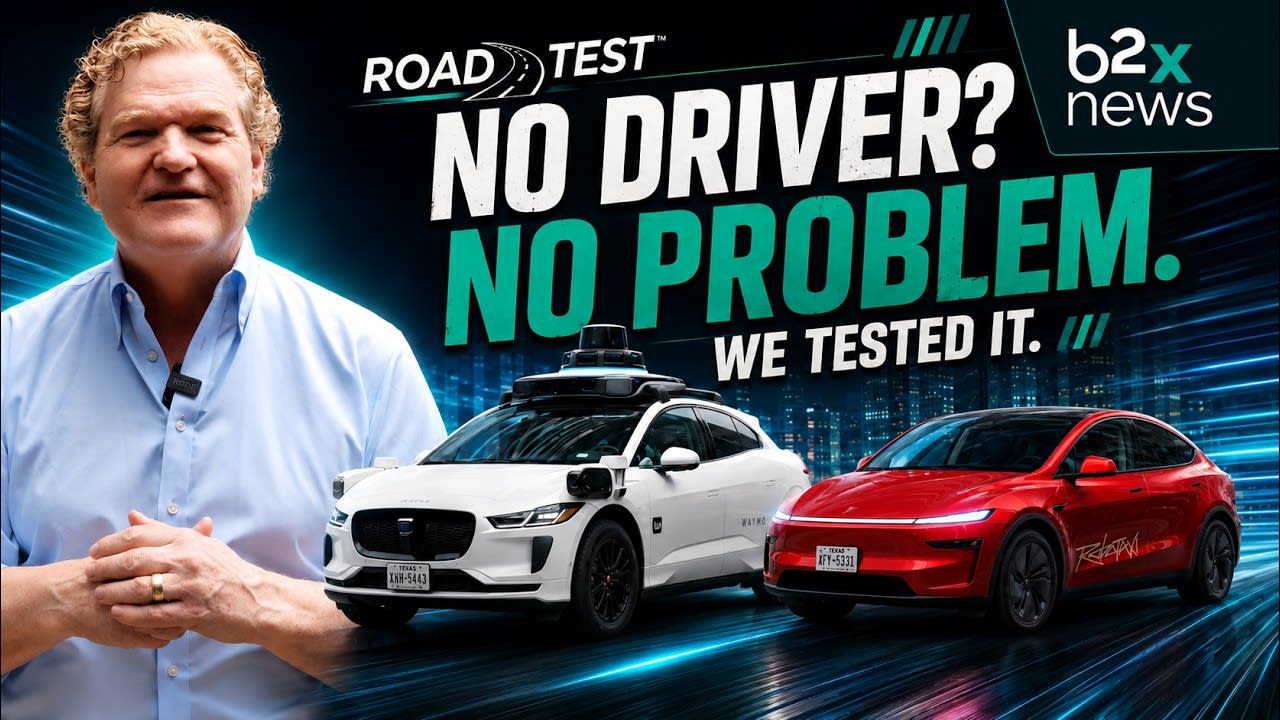
As autonomous ride-hailing providers proceed to develop, Colin Sutherland, proprietor and CEO of Bobit Enterprise Media, lately performed a side-by-side comparability in Austin, Texas, of three transportation choices: a standard Uber trip, a Waymo autonomous automobile, and Tesla’s Robotaxi service.
The video, a part of Sutherland’s Highway Check collection, explores how every service approaches the passenger expertise and highlights the differing applied sciences behind Waymo’s and Tesla’s autonomous methods.
Human Driver vs. Autonomous Expertise
Sutherland started the comparability with a traditional Uber trip into downtown Austin. Whereas the journey supplied the good thing about the motive force’s native information and dialog, these human interactions are clearly absent from autonomous ride-hailing providers.
He then transitioned to a Waymo automobile, the place riders unlock the automobile by way of the app and provoke the journey by way of an in-vehicle touchscreen. Waymo’s interface prominently shows what the automobile’s sensors detect in actual time, together with surrounding autos, pedestrians, cyclists, and roadway situations.
In line with Sutherland, the visualization supplied an added sense of confidence by permitting passengers to see what the automobile was “seeing” because it navigated metropolis streets.
Waymo and Tesla Take Totally different Technical Paths
One of the vital notable observations concerned the expertise stack behind every autonomous service.
Waymo depends on a mix of lidar, cameras, and different sensors to construct an in depth mannequin of the atmosphere. Tesla’s Robotaxi service, in contrast, makes use of a vision-only strategy based mostly totally on cameras and onboard computing.
Throughout the Tesla Robotaxi trip, Sutherland mentioned he was impressed by the automobile’s potential to detect surrounding visitors utilizing solely camera-based methods, together with autos touring on close by elevated roadways.
The Tesla trip additionally appeared much less conversational than the Waymo expertise, offering fewer audio notifications whereas nonetheless displaying surrounding autos and route info on the middle display.
Totally different Driving Behaviors
The comparability additionally revealed variations in driving model.
Sutherland noticed that Tesla’s Robotaxi generally behaved extra conservatively than a human driver would in sure visitors conditions. In a single instance, the automobile waited for an intersection to clear earlier than merging slightly than easing into visitors as many human drivers may.
On the similar time, he described the automobile’s turns and common operation as assured and predictable, contributing to passenger consolation throughout the journey.
Value Comparability
Past the expertise, Sutherland famous a possible client benefit.
Primarily based on his journey comparability, Tesla Robotaxi was roughly 25% cheaper than the comparable Uber trip — although as a service nonetheless in take a look at part, pricing is more likely to modify at full-scale rollout.
Each Waymo and Tesla utilized premium electrical autos for the rides, which Sutherland mentioned contributed to a extra upscale expertise than many standard ride-hailing autos.
Watch the Full Comparability
Within the full video, Sutherland walks viewers by way of the pickup course of, in-vehicle interfaces, passenger controls, and driving conduct of all three providers whereas providing his observations on how autonomous mobility is evolving in one of many nation’s main robotaxi markets.


