
From Tactical to Strategic: A Fleet Supervisor’s First 90 Days

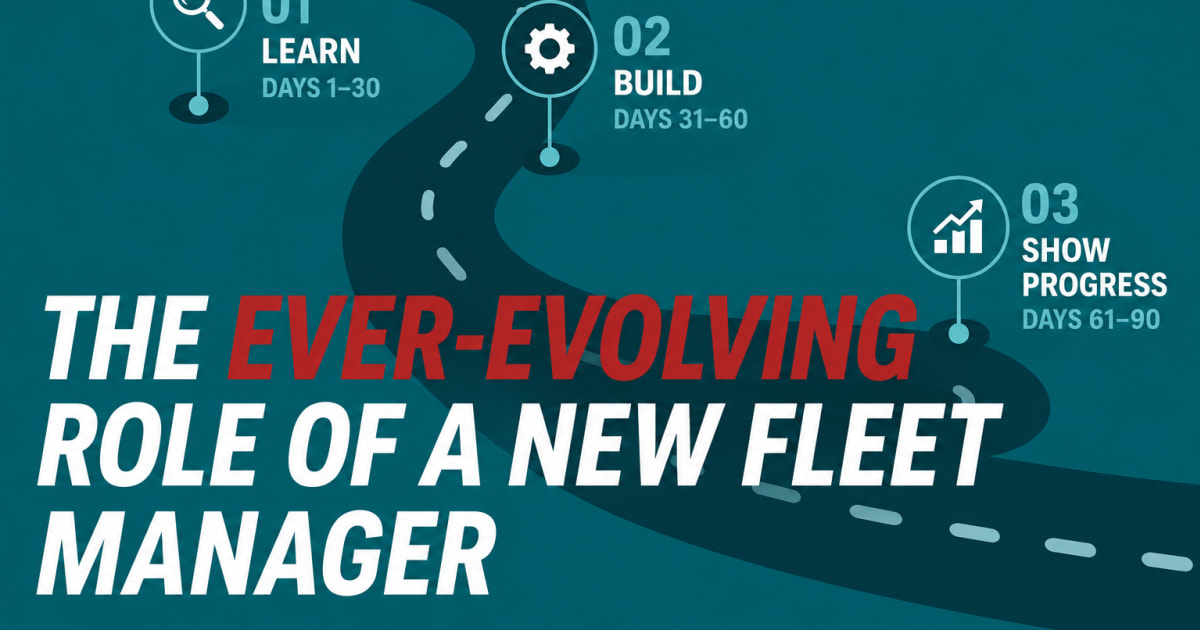
The primary 90 days as a fleet supervisor might be daunting, and the function has modified quite a bit through the years. What’s essential now?
Touchdown a fleet management function might be thrilling, but in addition overwhelming. Right this moment’s fleet managers aren’t merely chargeable for retaining automobiles on the highway. They’re anticipated to handle threat, management prices, analyze knowledge, collaborate throughout departments, and ship measurable enterprise outcomes.
New fleet leaders are rising sooner than ever because the trade continues to find new expertise and develop. The truth is that the function has modified, and as we speak’s fleet managers are chargeable for issues that weren’t beforehand as prevalent.
Whereas each group is totally different, the primary 90 days can decide how rapidly a brand new fleet supervisor builds belief, identifies alternatives, and establishes a long-term technique.
Trade veteran Erin Gilchrist says as we speak’s fleet managers are primarily “working a enterprise inside a enterprise,” making these first few months extra essential than ever.
The Fleet Supervisor’s Position Has Modified
Expectations for fleet managers have modified drastically during the last 3-5 years. It was once about simply automobiles and prices per mile; now, fleet managers are anticipated to suppose a bit extra strategically.
Fleet now intersects with finance, security, authorized points, HR, operations, and even customer support. Success has now moved previous primary upkeep prices.
“It’s not simply automobiles, upkeep, and ordering,” mentioned Gilchrist. “It’s threat, price, compliance, individuals, knowledge, buyer expertise, and technique unexpectedly. Management desires fleet to be proactive, predictable, and measurable…even when the operation is non-compliant, disengaged, and the fleet division is usually under-resourced. Profitable fleet managers have moved from a tactical to a strategic method.”
Days 1–30: Study Earlier than You Lead
Resist the urge to alter every little thing instantly. It’s essential to discover a supply of fact to maintain you grounded. Even imperfect knowledge is healthier than no baseline in any respect, which could possibly be present in:
- Fleet stock
- Driver assignments
- Car areas
- Titles and registrations
- Present studies
Understanding the present fleet’s ecosystem gives you a stable basis to construct on. Fleet managers can map out distributors, inner stakeholders, approval workflows, contracts, and present insurance policies.
Erin additionally recommends mapping out “who owns what (RACI).”
Observe: RACI is a typical challenge administration framework that defines who’s Accountable, Accountable, Consulted, and Knowledgeable for a given course of.
This course of can even reveal the most important ache factors and the questions that assist remedy them:
- The place is downtime highest?
- What frustrates drivers?
- The place are approval bottlenecks?
- Which compliance points require instant consideration?
The primary month can be a possibility to know one thing broader than the fleet itself: the group’s imaginative and prescient and mission. Figuring out what the corporate is in the end attempting to perform offers context for the selections a fleet chief must make within the months forward.
Cesar Ayala is a former United States Marine who now serves as fleet supervisor for O’Connell Panorama. Throughout his navy profession, Ayala served as a motor transportation operations chief. He transitioned into the fleet trade three years in the past. He manages just below 500 automobiles in his fleet.
“One method that has helped me handle competing priorities is the analogy of ‘glass balls and rubber balls.’ While you’re the lone ranger managing fleet operations, it’s important to be prepared to make sound choices, prioritize the workload, and stand behind these choices,” mentioned Ayala.
Some tasks are glass balls; they merely can’t be dropped. Others are rubber balls. They might must be deprioritized quickly, however they may bounce again and might be addressed later.
The problem for a brand new fleet chief is understanding which is which.
“When fleet priorities are aligned with the group’s mission, these choices turn into a lot clearer,” Ayala famous.
Days 31–60: Construct Construction
A easy construction goes a good distance. Create the routines that make the fundamentals stable. Communication prevents small points from turning into bigger issues, so creating techniques early units the proper basis.
This could possibly be weekly vendor conferences, common department check-ins, security conversations, and different updates from executives. Communication prevents the small points from turning into bigger issues. Gilchrist calls the method of working with HR, authorized, ops, threat, and finance people a “fleet isn’t the enemy” narrative, and as an alternative a “teaching, partnership, enablement, what’s in it for the sector” narrative.
Gilchrist identified that after the operation is assessed, the following step is to ensure everybody follows the identical course of. The second month is the place fleet managers construct consistency with how issues like upkeep are dealt with. Objectives for decreasing downtime, measuring efficiency, and constructing relationships must be clear.
For upkeep, establishing a transparent preventative upkeep (PM) routine that’s constant throughout all drivers will assist take away any confusion for them or distributors. Erin recommends answering a couple of key questions early: The place ought to drivers take automobiles for repairs? Who has authority to approve upkeep? How are preventive upkeep intervals tracked, and what occurs when automobiles fall out of compliance?
Documenting the method and speaking it to everybody concerned helps guarantee upkeep is measured constantly, and the method runs easily. Measure the method by means of KPIs like downtime, price per mile, PM compliance, security occasions, gas developments, et cetera. Leaders need measurable progress.
Ayala and his staff carry out plenty of upkeep and repairs on their very own. “Probably the most essential classes I’ve realized is understanding when to maintain a restore in-house and when to outsource it. The objective is to maintain operations transferring whereas balancing downtime, inner capability, and accountable spending.”
Days 61–90: Present Progress
Leaders do not anticipate perfection, however they do anticipate momentum. Gilchrist suggests growing a fleet roadmap and fast wins; these wins must be seen. They could possibly be:
- Upkeep approval cleanup
- Tightened gas controls
- Task accuracy improved
- Higher reporting cadence
Seen wins construct confidence, and clear communication with different leaders about the place you want help is vital. Get clear in your asks, priorities, and investments. Make management’s job in supporting you straightforward by presenting priorities clearly, connecting requests to ROI, explaining enterprise affect, and exhibiting measurable enhancements.
By this level, the primary 90 days ought to start producing a clearer roadmap: what should be protected, what wants enchancment subsequent, and what can wait. In different phrases, fleet managers ought to have a a lot better understanding of which tasks are the glass balls and which of them can bounce.
The Greatest False impression About Fleet Management
Success as a brand new fleet supervisor isn’t about writing higher coverage or choosing the proper know-how. Success relies upon extra on constructing belief, good affect, gaining discipline buy-in, aligning departments, and making a shared imaginative and prescient.
“It’s about individuals and affect,” mentioned Gilchrist. “In the event you can’t get buy-in from the sector, align management, and construct cross-functional belief, one of the best insurance policies and instruments on this planet received’t matter. Fleet leaders as we speak are principally working a cross-functional working system whereas the operation retains transferring. Most organizations nonetheless deal with fleet like a help operate whereas anticipating enterprise-level outcomes. Fleet leaders have to flip the script and place their fleets as income mills, not price facilities.”
The primary 90 days aren’t about fixing each problem. They’re about laying the inspiration for long-term success.


