
Report: 36% of Fleet Managers Are Delaying Replacements

Factor’s 2026 Market Pulse Report finds fleets are slowing alternative cycles amid tariffs, financial uncertainty, and rising prices.
Fleet managers throughout North America are holding onto their autos longer and tightening budgets, in line with survey outcomes from Factor Fleet Administration‘s fifth annual Market Pulse Report, a survey of fleets carried out throughout the U.S., Canada, and Mexico.
The findings come after 5 years of pandemic supply-chain chaos, inflation, and tariff-driven price volatility, with price management now the primary precedence by far.
Replacements on Maintain
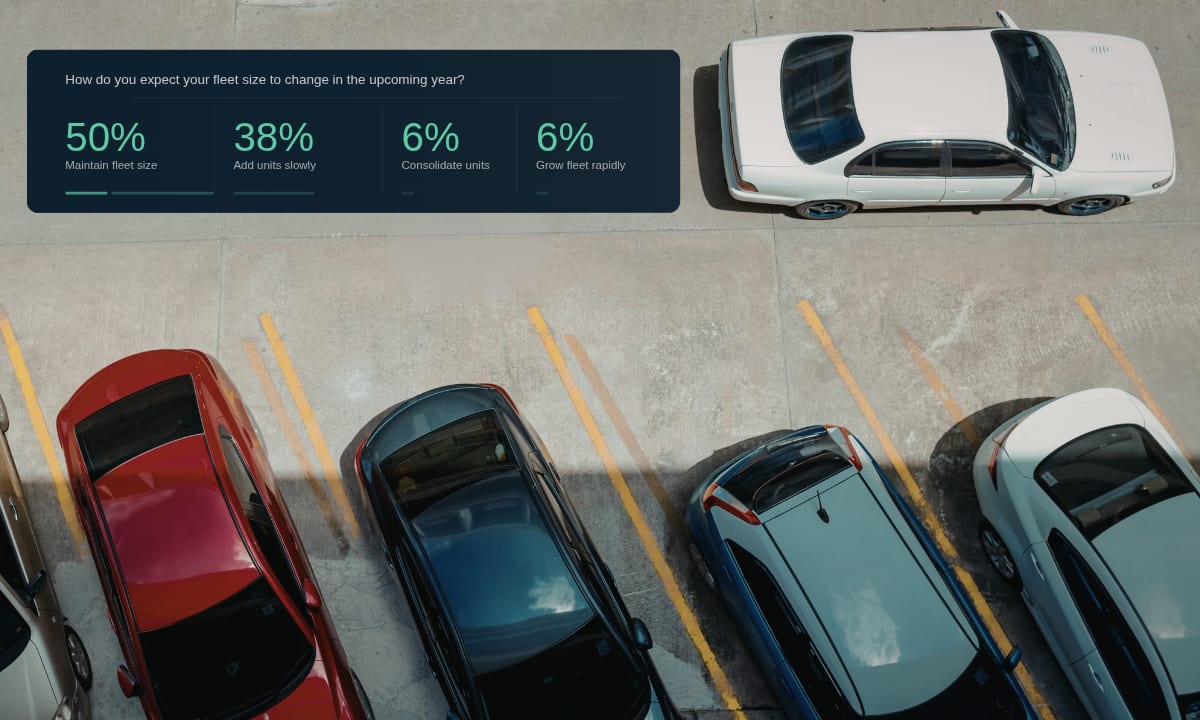
Essentially the most important discovering on this 12 months’s report is that 36% of respondents are actively delaying car replacements in response to tariff-driven price will increase. On the similar time, fleets usually are not broadly shrinking: 50% plan to take care of their present fleet dimension, 38% count on so as to add items (although progressively), 6% anticipate fast development, and 6% count on to consolidate their fleets.
Taken collectively, the information counsel that extending alternative cycles is much less a short-term response and extra a deliberate technique to handle prices, at the same time as fleets proceed to help measured development.
The implications are appreciable. Growing old autos can put upward stress on upkeep budgets, improve the danger of unplanned downtime, and complicate the driving force expertise. They could additionally sluggish electrification timelines as fleets maintain on to inner combustion autos longer.
Fleets in Canada and Mexico are leaning into this method extra aggressively than their U.S. counterparts, with each markets exhibiting stronger adoption of prolonged lifecycles and revised monetary fashions.
Price Management: The Dominant Precedence
Cited by 78% of fleets, price financial savings have emerged because the definitive precedence by far for 2026. Whereas price financial savings can be anticipated to dominate in most years, this 12 months marks a placing 17% improve over final 12 months.
Driver security ranked second at 63%, adopted by car downtime administration at 49%. Strategic initiatives similar to decarbonization (24%) and digital transformation (19%) lag additional behind.
Digital adoption prioritization has elevated by solely 3% in comparison with final 12 months, a stunning statistic given the perceived trade stress to drive effectivity by AI.
An Business in Transition
Trying again throughout all 5 editions of the Market Pulse Report, the trade’s trajectory appears to be like like this:
- 2022 introduced provide chain disruption and constrained car availability, but 82% of organizations had already begun electrification journeys — an indication of early optimism about long-term transformation.
- 2023 noticed inflation dominate the dialog, with 88% of respondents expressing concern about rising costs, and value administration turning into a central focus for the primary time.
2024 noticed a interval of cautious stabilization, with 60% of fleets reporting they deliberate to easily preserve their present technique.
- 2025 noticed operational self-discipline deepen additional, with 61% prioritizing price financial savings and whole price of possession discount, whereas longer-term initiatives like electrification receded.
- 2026 takes price financial savings one step additional to 78%, with fleet development minimal and alternative cycles stretching.
Tariffs Add Actual Stress
Trying on the macroeconomic backdrop, greater than half of respondents (54%) report reasonable to important operational influence from tariffs and commerce insurance policies — with 18% characterizing the influence as important, that means main results on prices, planning, and procurement. Solely 12% report no influence in any respect.
Responses to that stress range by market. Canadian fleets are most probably to delay replacements (30%) or shift sourcing towards native or tariff-exempt suppliers (18%). Mexican fleets are more and more counting on revised monetary fashions, together with versatile leasing and reimbursement packages (20%).
Apparently, U.S. fleets present the very best share making no adjustments in any respect (41%), although that determine nonetheless leaves practically six in ten adjusting technique in some type.
AI: Curiosity Is Actual, Adoption Is Early
Know-how is being approached fastidiously, however not as a transformative initiative.
Simply over half of fleets (53%) say they’re exploring AI and digital instruments, solely a modest improve from final 12 months. Bigger fleets are main the way in which, primarily deploying AI for driver conduct and security monitoring (67%) and controlling and monitoring fleet prices (61%). Predictive upkeep and administrative automation spherical out the highest use instances.
Respondents cited an absence of in-house experience, knowledge safety issues, and implementation prices as obstacles to adoption.
Electrification: Incremental Progress
The EV transition continues at a sluggish, uneven tempo. The share of fleets in early EV planning phases grew to 19% in 2026, up 11 proportion factors from final 12 months. One other 19% say electrification is at present in progress.
However the largest single group, 31%, says EV transition will not be a strategic precedence proper now.
For fleets with out energetic EV packages, hybrids and various gasoline autos are the popular bridge, with 60% expressing curiosity in including them. Charging infrastructure gaps, vary limitations, and whole price of possession issues stay the persistent frictions stopping quicker deployments.
Workforce Steady, Security Funding Continues
On the folks aspect, situations are comparatively regular. Almost seven in ten fleets (69%) report no important hiring or retention challenges, although bigger fleets really feel extra stress than smaller ones.
Security funding stays robust: 64% prioritize formal driver security and coaching packages, 53% use telematics-based driving teaching, and 54% actively use telematics options total.
2026: Warning Forward
5 years of Market Pulse knowledge present an trade that entered the 2020s with formidable transformation targets which were steadily (and understandably) redirected towards operational and value stability
The 2026 knowledge doesn’t mean fleets have deserted the long run, as EV planning is up, AI curiosity is rising, and various mobility options are gaining traction. However these initiatives are being pursued fastidiously, slowly, and selectively, with the principle purpose a watch on the underside line.
Factor Fleet Administration’s 2026 Market Pulse Report is predicated on a survey of fleet managers and enterprise leaders carried out throughout the U.S., Canada, and Mexico over a two-month interval. Respondents had been drawn primarily from operations and fleet (58%), finance and treasury (26%), and sourcing and procurement (9%) capabilities. Factor manages over 1.5 million autos globally.


