
CAR 2026 Recap Half 2: Closing the Hole Between Information & Remarketing Worth

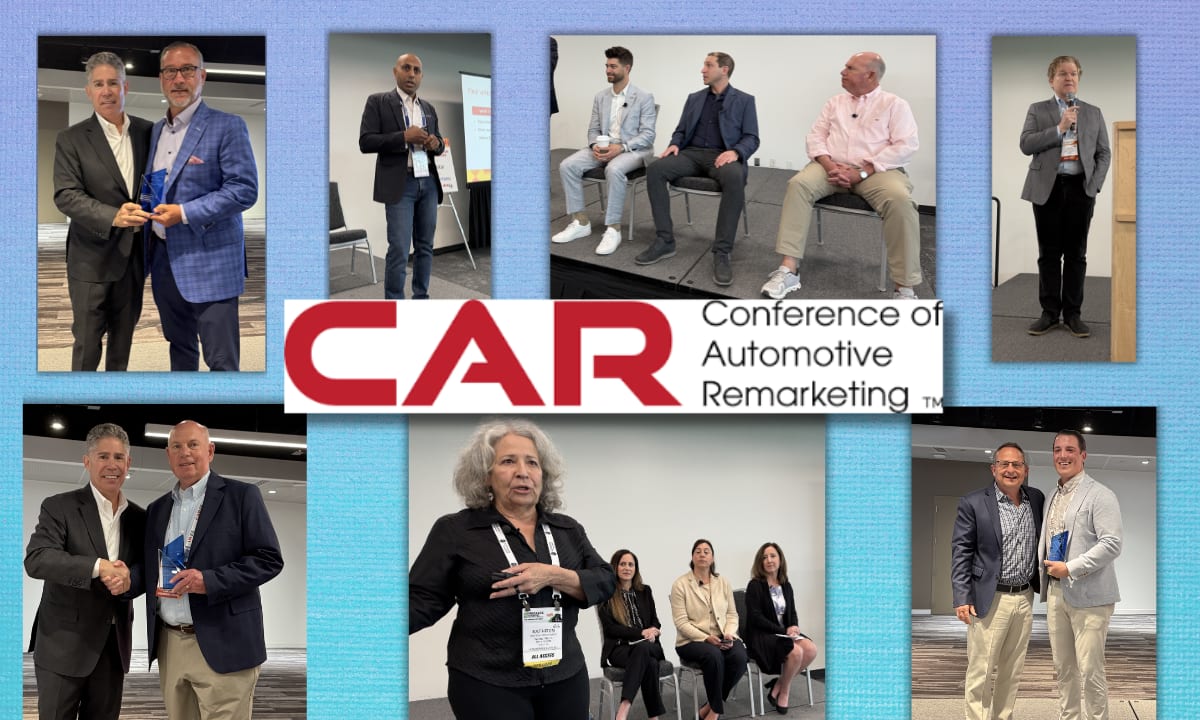
The second half of CAR 2026 examined how fleets can translate lifecycle technique, car information, and market shifts into greater real-world outcomes.
That is the second and last article recapping the 2026 Convention of Automotive Remarketing (CAR) that befell April 15-16 in Cleveland, Ohio, along side NAFA I&E.
The primary article overlaying CAR 2026 outlined missed alternatives for fleet operators to get well further worth from their remarketed autos, whereas understanding the necessity for pace to market — the idea of worth + velocity. This text covers the second half of the day, when the content material shifted extra towards execution.
Later periods examined how remarketers can shut the hole between the information that exists and the worth that’s truly realized at sale, whereas understanding the realities on the bottom.
Worth Retention Begins at Acquisition
Within the first recap article we reviewed Kathryn Schifferle’s presentation, which outlined the chance to higher align car specs, upfitting, and remarketing technique to protect worth over the lifecycle. Schifferle then moderated a panel dialogue that centered on the sensible challenges fleets face when capturing that worth in the true world.
The core concept of the panel dialogue was this: The choices that the majority have an effect on end-of-life worth are made at first of a car’s life.
Amy Hudson, COO of Mike Albert Fleet Options, walked by means of a car lifecycle’s financial concerns. Automobiles must be specified to satisfy operational wants, however not past them. Over-spec’ing could enhance performance within the quick time period, but it surely not often interprets right into a proportional enhance in resale worth.
Upfitting choices carry related trade-offs. Modular, non-structural tools — toppers, racks, slide-outs — protect optionality for the second purchaser. Extra invasive upfits serve their goal in operation, however can slender the resale market.
Timing age and miles within the cycle issues simply as a lot. Holding a car too lengthy introduces rising upkeep prices and declining situation. Biking too early leaves depreciation on the desk. The optimum window — promoting after preliminary depreciation however earlier than situation deteriorates — is the place disciplined fleet administration creates larger worth.
On the finish of the lifecycle, “You must be in the proper lane on the proper time,” Hudson stated, emphasizing that not all auctions or consumers are the identical.
However even with the proper technique, execution stays a problem.
Lori Rasmussen, president of PARS, emphasised how motion by means of the remarketing pipeline isn’t passive, with autos actively dealt with, serviced, and staged whereas in transit.
Remarketing isn’t nearly when and the place you promote — it’s about every thing that occurs between “in service” and “at sale.”
Diana Holland, founding father of fleet consultancy Cavis, pointed to a extra delicate challenge: determination paralysis. Fleet managers usually have entry to intensive information from telematics, upkeep data, and FMC reporting, but it surely exists in silos. Synthesizing that information takes time, and by the point a choice is made, the optimum market window could have handed.
Her prescription was pragmatic: “Begin small. Don’t boil the ocean. And be nimble sufficient to behave when the window is open.”
Utilizing Automobile Information to Enhance Worth
If the lifecycle panel framed the issue, Arun Rajagopalan’s presentation offered a extra technical rationalization of why it persists.
Rajagopalan, founder and CEO of Motorq, described a disconnect between what trendy autos can inform us and what the market truly makes use of to worth them.
As we speak, 96% of recent autos are geared up with embedded modems that may transmit detailed operational information. For lease returns, roughly 85% are related. Even amongst smaller fleets, which have a tendency to carry autos longer, connectivity is already round 65% and rising.
In a pilot examine of 14,000 fleet pickup vehicles, practically 80% of autos scored “glorious” on that metric. But within the wholesale market, those self same autos had been priced as common.
“The market is pricing it primarily based on averages,” Rajagopalan stated, including that fleet operators must be rewarded for higher conditioned autos.
That disconnect is extra a operate of lacking data than it’s of poor upkeep.
Conventional situation reviews and historical past instruments like Carfax and Experian AutoCheck are efficient at figuring out main incidents. However these occasions signify a small minority of autos. The remaining 98% are successfully grouped collectively, no matter their upkeep.
Motorq augments these instruments by including a car well being certificates alongside present reviews at public sale consumption. Early A/B testing by JD Energy (a Motorq investor) has proven measurable enhancements in each resale worth and days-to-sell when that information is seen.
The implications for EV remarketing are much more important. Battery well being — the one most essential consider an EV’s worth — can’t be assessed visually. As EVs start to signify a bigger share of off-lease returns, that hole turns into extra consequential.
As Bobit CEO Colin Sutherland famous on the finish of the session, the subsequent step must be to create client demand for this information, a lot as a CarFax grew to become an expectation.
The Coming EV Wave
The convention’s last session gathered the practitioners who must execute on every thing the day’s earlier audio system had described. Pierre Pons of TPC Administration moderated a panel that included Jimmy Douglas of Plug, the EV-specialist remarketing platform; Lawrence Knapp of Wheels; and Nathan Cummings of Anew Options.
The panel acquired into EVs, multi-channel technique, and the hold-versus-sell determination.
The 1.1 million off-lease EVs anticipated to enter the remarketing pipeline over the subsequent three years — roughly half of them Teslas — signify a quantity the wholesale infrastructure has not beforehand encountered and isn’t totally ready to soak up.
Lessee buyout charges are anticipated to be low, and supplier opt-in charges are equally modest. The trail of least resistance for many of those autos is thru wholesale channels, and the wholesale channels are nonetheless growing the instruments, coaching, and pricing frameworks to deal with them at scale.
Douglas, whose Plug platform focuses particularly on EV disposition, pushed again on the apocalyptic conversations round this wave.
The demand facet is extra constructive than the pessimists assume, he argued. Oil costs have moved again above $100 per barrel, strengthening the financial case for electrification as this wave hits.
Research constantly present that 70 to 80% of present EV house owners re-lease or re-purchase EVs when their cycle ends, which grows the pool of skilled EV consumers. And for first-time consumers priced out of recent EVs, a late-model used EV now represents an accessible entry level. “Used EVs could also be a gateway drug,” Douglas stated, to chuckles within the room.
Honing Your Channel Technique
Knapp introduced the fleet administration firm perspective to the channel technique query, which was according to the day’s broader theme that no single remarketing channel is perfect for all car sorts, situations, or markets. The self-discipline is within the matching — realizing which car belongs by which channel primarily based on its configuration, situation, and the geography of demand, relatively than defaulting to the closest obtainable possibility.
Cummings, with a transportation and logistics perspective, added that EVs pose operational complexity, noting they pose bodily dealing with challenges that transport firms are solely starting to deal with. They weigh considerably greater than comparable ICE autos, affecting load economics and service capability planning in ways in which haven’t but been totally priced into transportation contracts.
A depleted EV requires completely different pickup tools and dealing with procedures to keep away from drivetrain harm, which implies carriers want advance discover of battery state earlier than dispatch.
Maintain-Vs.-Promote Choices
The hold-versus-sell dialogue was extra nuanced. The fitting reply relies upon fully on the place you sit within the ecosystem.
OEM captives, rental firms, fleet administration firms, and impartial sellers all face essentially completely different economics when deciding whether or not to carry stock or transfer it. Rental firms that traditionally offered 20% of their fleets at retail and wholesaled the remaining at the moment are concentrating on 80% retail sell-through — a reversal that’s reshaping wholesale channel dynamics in methods the trade remains to be absorbing.
The self-discipline each operator agreed on was to remain alert to the macro forces that make timing consequential: oil costs, rates of interest, tariff impacts, regional demand indicators, and the regulatory setting for EVs in key markets. “You may’t hold your head within the sand,” stated Knapp. “Issues that occur on the opposite facet of the world will have an effect on what your car is price tomorrow.”
AI and the Subsequent Layer of Disruption
Sutherland took the dialog past the present market to the subsequent wave of disruption.
He shared observations from Bobit’s Agent’s Summit (an F&I convention in Las Vegas the identical week), the place AI-driven finance-and-insurance processes are already working in manufacturing — from totally automated interactions to AI-assisted human workflows.
In remarketing, the speedy affect is much less about changing human decision-making and extra about accelerating it by synthesizing information, automating back-office processes, and bettering buyer interactions.
The implication is that the trade has car well being, upfit, and lifecycle information. What’s lacking is integration, and that’s the place the trade is headed subsequent: The convention ended with a gathering to debate the formation of the Fleet Remarketing Trade Council and the Fleet Remarketing Affiliation.
Standardization of car well being information, larger transparency in situation reporting, and higher alignment throughout remarketing channels would require coordination throughout the ecosystem. These two new organizations had been created to just do that.


