
Adapting Fleet Coverage When Disasters Strike

In the midst of pure disasters fleet managers should shift priorities to guard folks and belongings. What coverage gadgets must be loosened, and when ought to the road be held?
Fleet insurance policies are constructed for consistency, to standardize guidelines governing gas spend, automobile use, and substitute cycles. However disasters expose their limits.
When Mom Nature disrupts operations, fleets should rapidly shift from inflexible management to real-time flexibility. Meaning enjoyable gas restrictions, repurposing autos, leaning on vendor networks, and making high-cost choices within the identify of uptime.
Three fleet execs at Rollins Inc., Florida Energy & Gentle Firm (FPL), and Mike Albert Fleet Options weigh in on assembly the problem of adapting coverage with out dropping management of prices, security, or accountability.
Worker Security is First Precedence
When a giant storm rolls by means of one among Rollins Inc.’s service territories, Charles Schott’s first precedence is to maintain his folks, not the autos.
“Neglect about killing bugs for 2 or three weeks,” mentioned Schott, fleet director for Rollins. “Let’s get folks’s lives again to regular.”
Throughout storms and disasters, Schott has gone as far as to dispatch drivers 100 miles to seek out open fuel stations, load up fuel cans, and run them again to workers who’ve misplaced energy, or ship bottled water to staff with out refrigeration.
Tom Man, VP of retail operations at Mike Al
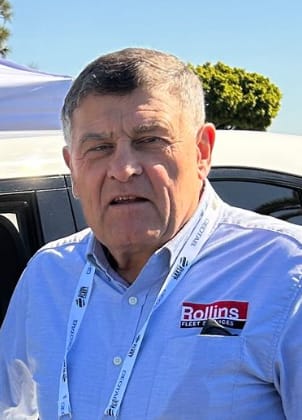
Charles Schott, Fleet Director, Rollins
bert Fleet Options, mentioned that when catastrophe strikes, three issues matter instantly: workers security, shopper communication, and the methods in place to assist each.
“When you maintain your associates and your shoppers,” Man mentioned, “sometimes issues run fairly easily.”
FPL has a corporate-wide system that checks on each worker after a catastrophe by way of textual content, e-mail, and cellphone. “If folks don’t reply, then their supervisor is contacted so we will guarantee that persons are okay,” mentioned Patti Early, fleet supervisor at FPL.
Reexamining Gas Coverage
When a hurricane knocks out energy throughout a service territory, gas pumps can cease working too, necessitating a reexamination of gas coverage and spending controls earlier than disasters strike.
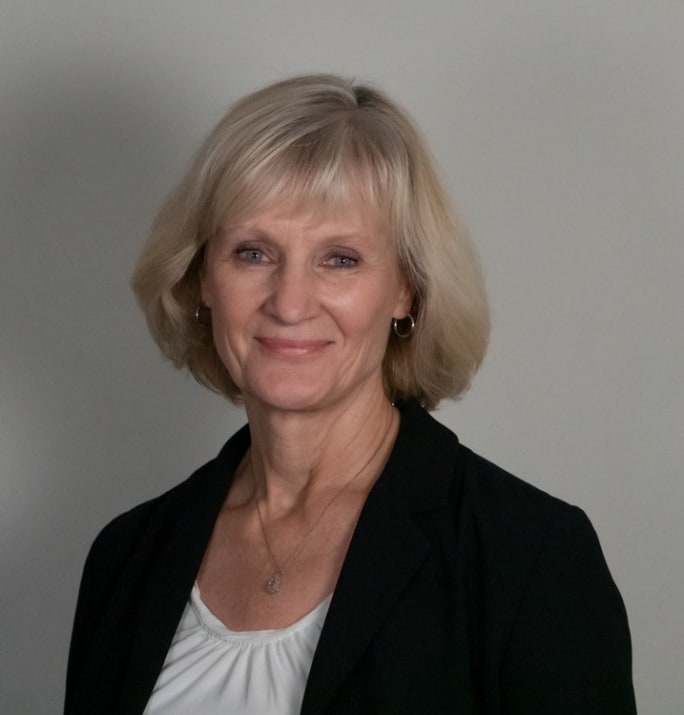
Patti Early, Fleet Supervisor, Florida Energy & Gentle
Underneath regular situations, FPL’s gas playing cards are capped at three makes use of per day, sufficient for routine operations throughout the corporate’s 68 inside gas websites. When a storm is imminent, and crews should go to retail sources, “They get 10 makes use of a day as an alternative of three,” mentioned Earley.
Early makes certain the swap occurs prematurely, not after drivers are already within the subject, in order that they received’t hit declines.
Rollins removes gas card restrictions completely in affected areas, quickly setting apart community guidelines and spending controls.
Car Use Flexibility and Limits
When a catastrophe displaces workers from their houses and routines, the corporate automobile turns into a useful resource that aids workers’ well-being. Each Schott and Early mentioned that fleet coverage ought to mirror that actuality, to some extent.
At Rollins, personal-use restrictions are lifted for workers within the affected space throughout an energetic catastrophe. If a driver wants to make use of an organization automobile to handle their very own restoration, reminiscent of selecting up provides, checking on household, or attending to non permanent housing, Schott mentioned that is a suitable use of the asset through the disaster window.

Tom Man, VP of Retail Operations, Mike Albert Fleet Options
“If you will get gas on your firm automobile, private use restrictions come off for that time period,” Schott mentioned, “till we get life again to regular once more.”
As a result of a lot of FPL’s mission is to help catastrophe aid, Early takes a extra restricted strategy, with the primary precedence being to get autos out of hurt’s manner.
One low-lying facility on an island off Florida’s West Coast requires a barge to maneuver gear from it. The main focus is asset safety first, operational flexibility second.
Each draw a line on non-authorized drivers reminiscent of spouses or relations, which doesn’t change throughout a catastrophe. “We do not blur these traces,” Schott mentioned.
Man provides a coverage level that will get missed: at all times hold a passenger seat in each automobile. Some fleets take away seats to maximise cargo area. In an emergency, that seat can be utilized to get one other stranded driver house.
“What if?” Man mentioned. “Be certain that there’s coverage across the quantity of seating that is at all times left within the automobile.”
Car Readiness, Pool Items, Preparedness Kits
Fleets are smart to maintain backup or pool autos readily available for unscheduled upkeep and for deployment throughout storms.
Early holds again auction-ready autos throughout storm season relatively than promoting them on schedule. “We’ve three auctions a 12 months,” she mentioned. “Throughout storm season, we maintain some autos in case now we have a storm and wish further sources.”
Nevertheless, autos that sit unused develop useless batteries, rotting tires, and frozen brakes.
Man recommends that fleets create a coverage mandating that backup or pool models will not be solely began as soon as a month but in addition pushed no less than as soon as a month. “Don’t simply flip it on,” he mentioned. “Any individual ought to drive it.”
He additionally recommends equipping each automobile with a fundamental emergency equipment that features a hearth extinguisher, a tire restore equipment, and a leap pack with a built-in air compressor. “You may get them for about 80 bucks,” he mentioned.
Let Income Drive Substitute Technique
When a automobile is misplaced to a catastrophe, the intuition is to interchange it as quick as potential. Man’s recommendation is to first ask: How a lot income does that automobile generate per day?
“You have acquired a automobile that makes $10,000 a day,” Man mentioned. “You might in all probability afford to purchase one from a vendor relatively than wait to order it from the producer.”
Sure, a dealer-locate prices extra upfront. However for a high-revenue unit, the each day loss from downtime dwarfs the premium. For a lower-revenue automobile, the equation is completely different. A producer order, a rental, and even pairing two technicians in a single truck will be the extra economical path.
The identical logic extends to fleets ordering autos for growth initiatives; the models are already on order and spec’d however not but assigned. In a catastrophe, Man mentioned, these models ought to pivot to substitute relatively than development.
“Ensure you are taking good care of the shoppers you’ve been serving for years,” he mentioned. “Sadly, you might have to delay that new development mission a little bit bit.”
Maximize Your Partnerships
The distributors, rental corporations, and resort chains {that a} fleet makes use of in each day life will be sources throughout a catastrophe — however have to be secured earlier than they’re wanted.
Man has these numerous suggestions:
-
Domesticate a number of rental firm relationships, and people with nationwide protection.
-
Pre-arranged resort contracts for drivers who would possibly get displaced.
-
Get agreements with sellers for automobile locates.
-
Leverage vendor relationships that embrace entry to coated parking, notably in hailstorm areas.
Think about a Catastrophe Drill
One perception from Earley — whose fleet have to be ever-ready in hurricane-prone Florida — is that FPL has an annual catastrophe drill.
This drill is a week-long simulation run each Might that stress assessments inside plans and vendor coordination. Yearly brings a unique state of affairs, a unique storm path, and a unique set of logistical issues to resolve. Distributors are contacted. Plans are set.
Generally, the situations get difficult.
“They requested me if a Chinook helicopter may choose up a loaded gas trailer,” Early mentioned, describing one drill involving an FPL facility with a failing generator and washed-out bridges. “By the way in which, it may possibly’t.”
The purpose wasn’t the helicopter; it was that somebody had thought by means of the issue earlier than it was actual. The workforce pivoted to a barge.
Man likens this coaching to corporations that run annual phishing consciousness coaching. “We take sufficient trainings at each firm,” he mentioned. “Why should not this be a part of it?”
Write It Down
Each perception these executives laid out, from the storm profile on the gas card and the pool unit utilization coverage to the revenue-based substitute framework and the seller contracts, is nugatory if it lives solely in somebody’s head.
Man insists that fleet managers doc the procedures. Put a paper copy within the glove field and add them to the fleet app drivers already use. When a catastrophe hits, the plan must be accessible with out making a cellphone name.
“Haven’t got this be a dialog,” Man mentioned. “Have it written down.”
Schott provides an vital nuance: At Rollins, catastrophe coverage does not completely change after an occasion — it makes situational exceptions after which reverts to its unique state. The flexibleness on gas playing cards, private automobile use, and spend limits is a pre-authorized exception to the prevailing coverage, triggered by particular situations and confined to the affected space.
“The catastrophe creates a must possibly not change the coverage, however simply amend it for because the state of affairs dictates,” Schott mentioned. “As soon as the state of affairs is over, the coverage is again in impact.”


