
Catastrophe Readiness Is Not a Fleet Depend, It’s a Stress Check of the Complete System

Fleet readiness isn’t about your car rely. It’s about situation, capability, and whether or not your system can truly carry out beneath stress.
There’s a second in each catastrophe response when the plan stops being a plan and begins being a actuality take a look at. That’s often the second when organizations discover out whether or not they have been truly ready or simply professionally optimistic.
On paper, most emergency plans look fairly good. There’s a useful resource checklist. There’s a communications stream. There’s a chain of command. There are procedures for fueling, staging, dispatching, and help. In calm circumstances, it will possibly all learn as logical, full, and reassuring.
However disasters don’t care how polished the binder appears to be like.
They care whether or not the automobiles you might be relying on will begin, whether or not the individuals who repair them can be found, whether or not your gas technique holds when regular supply patterns break down, whether or not your store can take up a surge, whether or not your backup items are literally road-ready, and whether or not anybody can see the total working image clearly sufficient to make sensible choices in actual time.
That’s the distinction between a plan that exists and a system that performs.
And that’s actually the center of what Scott Conlon, Steve Saltzgiver, and Tony Yankovich of RTA are getting at. From barely completely different angles, all three are pointing to the identical uncomfortable fact. Fleet readiness is routinely misunderstood as a result of too many organizations nonetheless deal with it like a list query when it’s actually an operational endurance query.
Tony Yankovich put it finest. “Most leaders suppose when it comes to ‘Do we now have sufficient automobiles?’ The higher query is ‘Can our system maintain output beneath stress?’”
That query is greater. It’s more durable. Additionally it is the fitting one.
As a result of when catastrophe hits, readiness will not be determined by what number of belongings seem on a report. It’s decided by whether or not the complete help system behind these belongings can proceed functioning when demand spikes, circumstances change, and small weaknesses turn out to be pricey in a short time.
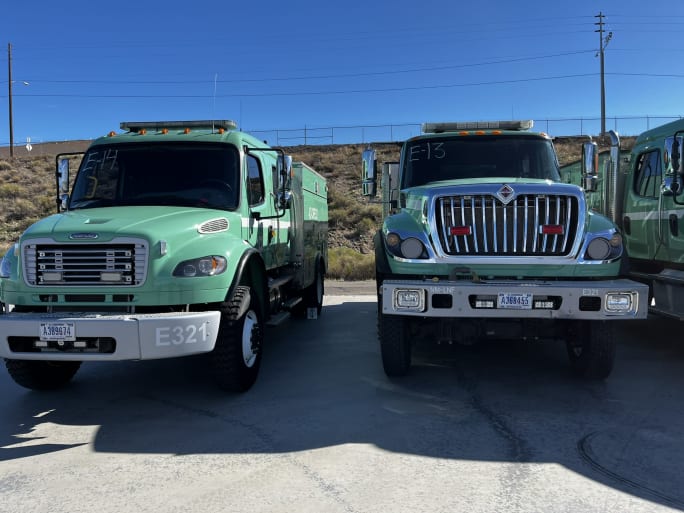
From staged fleets to subject camps, catastrophe response shortly reveals whether or not operations can maintain up beneath real-world stress, not simply on paper.
Why So Many Catastrophe Plans Fail Anyway
One of many extra irritating facets of catastrophe planning is that failure often doesn’t stem from a complete lack of effort. Most organizations do put time into preparedness. They construct plans. They maintain conferences. They doc processes. They determine crucial capabilities. No person is sitting round hoping to be caught flat-footed.
And but, plans nonetheless fail in execution on a regular basis.
Saltzgiver defined why with brutal simplicity. “Catastrophe plans fail as a result of they’re constructed on assumptions as a substitute of verified circumstances,” he mentioned. “They’re logically sound, however nobody validates whether or not the underlying sources can truly carry out beneath stress.”
That may be a sharp level, and it will get at the actual drawback. A variety of planning is constructed on a sequence of assumptions that feels cheap till the setting turns unstable.
The fleet administration system exhibits the unit as accessible, so it’s counted as accessible. The backup generator was effective the final time somebody checked, so it acquired assumed into the plan. There’s a gas vendor on paper, so gas continuity is handled as coated. A store sometimes handles routine upkeep, so leaders assume it will possibly additionally lengthen to emergency help. The communications course of exists, so individuals assume it’ll nonetheless work when networks are overloaded or groups are scattered.
Catastrophe response has a method of stripping all of that down to 1 blunt query. Did anybody truly confirm this?
That’s the reason Saltzgiver’s method begins earlier and goes deeper than many organizations are used to. His first level is to not replace the spreadsheet or revise a guidelines. It begins with an actual threat evaluation. Perceive the hazards that truly suit your geography and working setting. Wildfires. Hurricanes. Earthquakes. Civil unrest. Flooding. Main energy disruption. Then determine the precise vulnerabilities these dangers expose, together with gas provide, communications, staffing, and entry to automobiles and amenities.
That issues as a result of readiness is all the time contextual. A fleet that appears ready for routine service supply could also be nowhere close to ready for evacuation help, public security backup, wildfire staging, or prolonged energy outages. If leaders don’t outline which operations are really mission-critical, the whole lot will get handled as equally necessary, and that’s often step one towards confusion.
Saltzgiver’s level right here will not be educational. It’s sensible. Plans fail when they’re constructed on generalized confidence as a substitute of particular validation.
The Most Frequent Readiness Delusion in Fleet
If there’s one delusion this complete dialog retains circling again to, it’s this: if a car is assigned, listed, or marked as accessible within the system, it have to be prepared.
That assumption is in all places. Additionally it is one of many greatest causes fleets overestimate their actual catastrophe posture.
Saltzgiver mentioned the one commonest readiness assumption fleets get improper is that “availability within the FMIS equals readiness.”
Yankovich comes on the similar subject from the working ground. “Assigned doesn’t equal prepared,” he mentioned. “What most plans miss is that fleet availability is dynamic, not static. In a whole lot of fleets, the ‘accessible’ checklist is admittedly simply a list checklist. It possible doesn’t mirror operational readiness.”
That distinction is not only a superb line. It’s the complete drawback.
Administrative availability will not be the identical as operational readiness. One tells you {that a} unit is in your books and never at present coded out. The opposite tells you whether or not that car might be put into service instantly, beneath stress, for the work you might be asking it to do.
These are very various things.
A car might be technically accessible whereas sitting with overdue PM, unresolved defects, getting older tires, battery points, a pump that has not been examined not too long ago, deferred repairs somebody has been “watching,” or tools that has not been checked since final season. It may be listed and assigned and nonetheless be one scorching day, one lengthy shift, or one mechanical pressure away from turning into anyone else’s operational headache.
That’s the reason the early warning indicators matter a lot. Saltzgiver referred to as them out clearly: slipping PM compliance on crucial belongings, a rising backlog of open work orders, and components delays. These aren’t simply upkeep metrics. They’re readiness indicators. They inform you the system is beginning to drift.
Yankovich expands on the identical level with extra urgency. Readiness is dynamic as a result of the system supporting the fleet is dynamic. Technician capability modifications. Components availability change. Store throughput modifications. Gasoline entry modifications. Automobile situation modifications. The standing of a fleet will not be a set fact that may be declared as soon as and trusted indefinitely. It have to be managed, re-verified, and pressure-tested.
That’s one motive each Saltzgiver and Yankovich preserve returning to the necessity to section the fleet and to get particular about what truly issues. Saltzgiver’s recommendation to create and actively handle a crucial asset checklist is deceptively easy, however it could be one of many highest worth strikes a fleet could make. Most organizations nonetheless deal with all belongings too evenly. In an emergency, that could be a mistake. Not each car is crucial to continuity, emergency response, or life-safety help. Some are much more important than others, and people items want a special degree of consideration, urgency, and visibility.
It’s a little like triage earlier than the incident, which is precisely what good preparedness needs to be.

When response is underway, fleet efficiency is measured in movement, not simply availability studies.
Readiness Is Actually About Situation, Capability, and Continuity
Yankovich’s broader framework is helpful as a result of it will get fleet leaders out of the behavior of pondering in easy counts.
He mentioned the three issues that outline fleet readiness are situation, capability, and continuity.
The situation is easy, at the very least on the floor. Are the belongings really dependable? Not theoretically dependable. Not “in all probability effective.” Not “it ran final time.” Dependable sufficient to function in a high-demand setting with out turning into a legal responsibility.
Capability is the place the dialog will get extra attention-grabbing. Can the group maintain operations? Not simply launch them however maintain them. That features technician availability, bay capability, after-hours help, components stock, fueling entry, and the power to soak up a spike in repairs with out instantly falling behind.
Continuity is the larger methods query. Can the supporting infrastructure maintain up? Can communication channels keep open? Can components and gas nonetheless transfer? Can upkeep help proceed if amenities are disrupted? Can staffing maintain collectively by fatigue, specialization calls for, and prolonged response timeframes?
That framework issues as a result of it shifts readiness away from a static measurement and right into a stress-based one. A fleet can have sufficient automobiles and nonetheless fail all three assessments.
In reality, Yankovich argues that one of many greatest blind spots in real-world occasions is that management tends to give attention to car rely, regardless that the precise failure level is usually labor.
“In lots of real-world occasions, the failure level is technician availability, fatigue, and specialization,” he mentioned. “You possibly can’t surge expert labor in a single day, and most fleets are already working near capability.”
That time deserves extra consideration than it often will get.
Catastrophe planning typically assumes belongings are the constraint as a result of belongings are simpler to rely. Expert labor is more durable to quantify and far more durable to exchange on brief discover. If solely sure technicians can diagnose and restore sure methods, in case your after-hours bench is skinny, if fatigue units in throughout a protracted response, or if store area is already constrained, your efficient fleet capability might collapse lengthy earlier than you run out of automobiles on paper.
That’s not a facet subject; that’s the working actuality.
The Threat Fleets Carry Quietly Till It Is Too Late
There may be additionally a slower-moving readiness drawback that sits within the background of many fleet operations and will get normalized over time: deferred upkeep and getting older belongings. Yankovich didn’t soften this one.
“This is without doubt one of the greatest hidden dangers,” he mentioned. “Most fleets handle deferred upkeep each day, however in actuality, they’re simply carrying ahead threat.”
That is a vital distinction. Deferred work is usually framed operationally as one thing manageable, short-term, or routine. In equity, many fleets are doing the very best they will with finances, staffing, and provide constraints. However the threat doesn’t disappear as a result of it has been administratively managed. It accumulates.
And disasters are superb at accumulating on collected threat.
“Older fleets have larger failure charges,” Yankovich mentioned. “In an emergency, you’re asking your fleet to function at peak demand. That’s when getting older items sometimes fail.”
That line lands as a result of it displays what a whole lot of fleet leaders know of their bones. Throughout unusual operations, getting older automobiles can typically be coaxed alongside, scheduled round, or strategically patched. In an emergency, there’s much less forgiveness. Items run more durable. Downtime issues extra. Restore home windows shrink. Logistics are getting messier. Warmth, smoke, particles, idling, stop-start calls for, lengthy deployments, and poor highway circumstances shortly expose weaknesses.
Saltzgiver addresses the identical actuality from the angle of resilience. His recommendation is not only to take care of automobiles higher normally. It’s to take care of larger PM compliance, particularly to scale back breakdown threat throughout emergencies, diversify fueling methods so the fleet will not be depending on a single mode of provide, and preserve crucial spares readily available for the items that turn out to be most respected beneath stress, together with service vehicles and mills.
That’s what stronger preparedness actually appears to be like like in fleet. It’s not a slogan. It’s the accumulation of sensible choices that reduces the variety of dangerous surprises later.
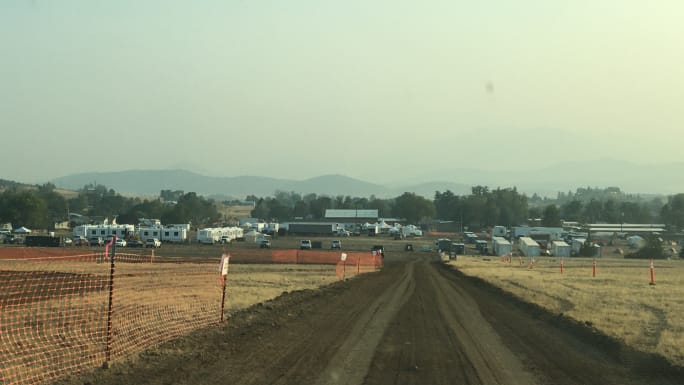
Massive-scale response relies on visibility throughout individuals, belongings, and operations in actual time.
The place Catastrophe Response Begins to Break Down
Conlon’s contribution deepens the story by displaying what occurs as soon as an incident is definitely underway and a number of companies, contractors, and help sources enter the image.
His core statement is that coordination and communication most frequently break down “within the means of matching sources to the operational plan in actual time.”
That’s value sitting with for a second, as a result of it highlights a standard false impression about coordination failure. Folks typically suppose breakdowns stem from inadequate communication, effort, or urgency. Conlon’s level is extra operational than that. The issue is that decision-makers are continually making an attempt to align useful resource allocation with a shifting scenario, and they’re doing so with out adequate real-time readability.
“The problem isn’t simply getting sources,” Conlon mentioned. “It’s getting the fitting sources, in the fitting portions, on the proper time.”
That sounds apparent, however it will get sophisticated quick in wildfire and interagency response. Incident groups are attempting to order and place each operational belongings and logistical help. Engines. Water tenders. Gasoline vehicles. Tactical items. Provide automobiles. Contractors delivering hose, supplies, and tools. They’re additionally making an attempt to keep away from two equally dangerous outcomes: under-ordering and over-ordering.
Conlon defined it this fashion: “Incident groups are constantly making an attempt to steadiness having sufficient sources with out over-ordering. Too few slows response. Too many will increase value and pulls belongings away from different incidents.”
That pressure turns into even more durable to handle as a result of wildfire circumstances are so dynamic. “An incident that seems to require weeks of sustained sources can scale down quickly as a consequence of a climate occasion,” Conlon famous, which creates “a relentless lag between planning assumptions and real-world wants.”
A theme is rising right here, and it’s the similar one Saltzgiver raised on the strategy planning stage. Assumptions age badly in fast-moving environments.
Conlon’s model of that problem is the working image. One of many greatest gaps, he mentioned, is the dearth of clear real-time visibility into how sources are literally getting used. With out that, leaders are making deployment, allocation, and launch choices based mostly on estimates moderately than on-the-ground operational actuality.
The results present up in patterns fleet leaders will acknowledge instantly. Assets are deployed removed from their residence items whereas new native incidents emerge and require backfill. Property are shifting lengthy distances unnecessarily. Items spending an excessive amount of time deadheading between assignments moderately than actively contributing to operations. Elevated value. Extra fatigue. Extra put on. Extra security publicity. Extra round inefficiency.
On the middle of all of it, Conlon mentioned, companies are attempting to coordinate “with no totally shared, real-time working image.”
That is without doubt one of the clearest descriptions of catastrophe friction in the entire set of responses.
Know-how Is Not the Drawback. Integration Is
One of many extra nuanced factors Conlon makes is that catastrophe response will not be affected by a complete absence of know-how. In lots of circumstances, the instruments exist already. The issue is that they don’t seem to be constantly built-in throughout the total response setting.
He pointed to real-time GPS and asset monitoring as one of the underutilized applied sciences within the subject. Many companies have already got monitoring functionality on main on-road tools. Some are even increasing it to off-road sources like bulldozers and UTVs. The know-how is there.
The hole emerges when a number of companies and contracted sources come collectively.
Wildfire response doesn’t happen inside a single neat system. It entails federal companies, state and native cooperators, and quite a few contractors and distributors. These contracted sources could also be totally certified operationally, however they typically don’t arrive with appropriate monitoring instruments that combine into the bigger incident setting. In consequence, not all sources are seen in actual time, and the incident command is working with partial info.
That’s the reason Conlon’s level lands so properly. “The difficulty isn’t entry to know-how,” he mentioned. “It’s the shortcoming to standardize and scale it throughout all taking part sources.”
That may be a rather more mature option to discuss know-how gaps. It’s not a shiny-object argument. It’s an interoperability argument.
Saltzgiver echoes that very same mindset from the fleet operations facet when he talks about communication protocol redundancy and digital monitoring. Radios, satellite tv for pc telephones, cell apps, textual content and electronic mail chains, designated emergency communications lead, FMIS instruments for monitoring asset standing and response prices, and digital documentation that may later help reimbursement and restoration evaluation. None of that’s horny. All of it issues.
What each views counsel is that the way forward for fleet readiness will not be merely extra know-how. It’s better-connected know-how, utilized in ways in which enhance real-time visibility, help decision-making, and cut back operational blind spots.
What Actual Preparedness Seems to be Like Earlier than the Occasion Begins
One factor that makes Saltzgiver’s contribution particularly precious is that he provides a full pre-incident framework, not only a analysis of what tends to go improper.
He begins with threat evaluation, then strikes into the necessity for an emergency fleet response plan that truly defines procedures for activation, asset reallocation, fueling, communications, contact lists, chain of command, and alternate communications. Simply as necessary, fleet-specific planning has to hook up with the broader emergency operations plan. In any other case, the fleet stays adjoining to the incident moderately than built-in into it.
He additionally pushes exhausting on the issues that make fleets extra resilient earlier than circumstances deteriorate. Greater PM compliance. Diversified fueling methods, together with backup energy, cell fueling, or different gas preparations the place acceptable. Important spare components for high-demand help items. Strategic staging based mostly on possible threats or evacuation zones. Readiness kits in automobiles. Battery checks for idle backup items. Gasoline rotation. Workers coaching. Tabletop workouts.
There’s a good thought-leadership thread operating by all of that, which is that this: good catastrophe preparedness within the fleet is never dramatic. It’s cumulative.
It’s not one grand transfer. It’s a collection of disciplined choices that shut the hole between assumed functionality and verified functionality.
That’s the reason Conlon additionally emphasizes preseason, hands-on readiness validation. Engine academies are one instance. Convey collectively the crews, automobiles, and fleet personnel. Examine the equipment. Carry out PM. Check the pumps. Refresh operator information. Validate each the tools and the individuals earlier than the season begins.
That method does one thing necessary each psychologically and operationally. It stops the group from treating readiness as a paperwork train and turns it right into a subject actuality train.
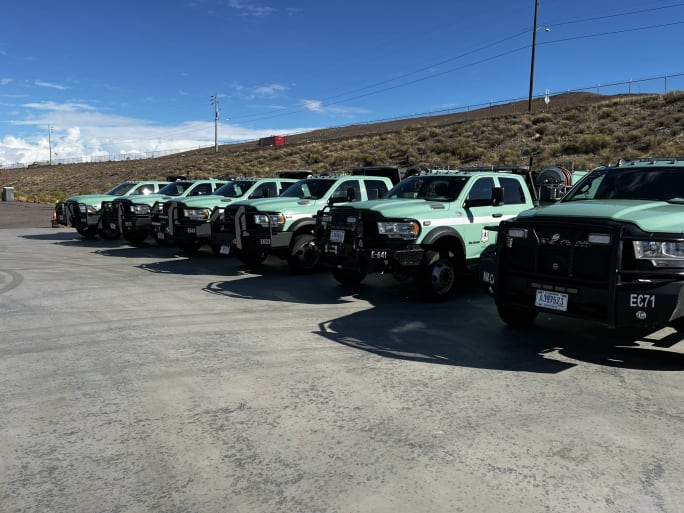
A full lineup means little if the system behind it will possibly’t maintain output beneath stress.
You Can’t Stress-Check Readiness from Behind a Desk
If there’s one sensible lesson that comes by loudest from each Saltzgiver and Yankovich, it’s that readiness have to be bodily validated.
Yankovich was particularly direct about this. If a fleet chief needs to pressure-test actual availability this week, the reply is to not pull one other FMIS report. It’s to stroll the road.
“Begin with a hands-on validation of auto and tools availability,” he mentioned. “Not simply operating a report out of your FMIS.”
Meaning bodily verifying crucial items. It means checking PM compliance, open work orders, deferred upkeep, technician protection, components stock, gas capability, and infrastructure resilience. And if a recognized occasion is imminent, his advice is even blunter: somebody ought to bodily contact each possible response unit forward of time.
There may be a whole lot of knowledge in that phrase. Touching the items means you aren’t counting on a digital abstraction. You’re confronting actuality. You see whether or not the backup truck begins cleanly, whether or not the staged unit has the fitting security gear, whether or not the battery subject somebody was monitoring final month continues to be unresolved, whether or not the gas degree is the place it needs to be, and whether or not the defects logged within the system match the circumstances on the bottom.
Conlon’s incident-level level reinforces the identical concept. When sources arrive at a hearth, they need to be inspected at check-in by certified mechanics, as a result of a single breakdown within the improper place can disrupt way over a single car. A disabled unit on a slim highway can block ingress and egress for everybody behind it. That’s not only a upkeep failure. It’s an operational choke level.
In different phrases, bodily validation will not be old-school warning. It’s a strategic necessity.
Why ICS Nonetheless Has So A lot to Educate Fleet
Conlon’s closing set of observations widens the lens in a useful method. One of the transferable classes from wildfire operations, he mentioned, is the worth of the Incident Command System. ICS works as a result of it supplies a clearly outlined chain of command, standardized roles, a daily operational cadence, and a centralized incident motion plan that provides everybody a standard construction.
That issues as a result of main catastrophe response is not only about velocity. It’s about coordinated velocity.
It’s straightforward for fleet organizations to think about themselves as help capabilities adjoining to the response, however Conlon makes the purpose that fleet typically performs a crucial operational help function by fueling, upkeep, amenities, and staging. If fleet leaders and groups aren’t conversant in ICS and NIMS, it turns into straightforward to unintentionally work exterior the system, even when the intent is sweet.
Conlon’s warning about freelancing is especially related right here. ICS is designed to forestall well-intentioned actions that bypass the plan, disrupt coordination, misallocate sources, or create security dangers. For fleet leaders, understanding that construction is not only a pleasant skilled growth add-on. It’s a part of readiness.
He additionally factors to a different lesson that emerged from COVID and nonetheless feels underappreciated: digitizing administrative processes. QR codes, digital varieties, cell timekeeping, and lower-contact documentation helped cut back friction and enhance scalability in high-density environments like fireplace camps.
That may be a helpful reminder that readiness will not be solely concerning the rolling inventory. Additionally it is about how effectively the help processes across the operation operate when circumstances turn out to be more durable.
What Fleets Ought to Do Now, Earlier than the Climate Makes the Determination for Them
Probably the most compelling factor about these three views is that, collectively, they transfer the dialog previous obscure preparedness speak and towards a sharper normal.
Cease asking whether or not the fleet appears to be like prepared.
Begin by asking whether or not it has been verified, segmented, stress-tested, and built-in into a bigger response system that may face up to pressure.
Meaning conducting an actual threat evaluation and defining mission-critical operations. It means constructing a fleet response plan that’s tied to the broader emergency plan, not floating beside it. It means actively managing a crucial asset checklist moderately than pretending that each unit has equal operational significance. It means bettering PM self-discipline on the automobiles that matter most.
It means validating backup gas, communication redundancy, technician availability, after-hours help, components entry, and infrastructure constraints. It means bodily inspecting possible response items earlier than occasions, not trusting the report to inform the entire story. It means utilizing digital instruments to trace prices, standing, and efficiency, whereas recognizing that interoperability nonetheless issues greater than software program alone.
It means coaching, tabletop workouts, and ICS familiarity for the individuals who rely on it. And it means planning for post-incident restoration and classes discovered earlier than the incident has even began.
That’s not overkill. That’s preparation. And sure, a few of that is exhausting. A few of them are useful resource dependent. A few of it’ll expose issues management doesn’t love listening to. However that’s precisely why it must occur earlier than the emergency and never throughout it.
Driving Ideas
Fleet readiness is usually mentioned like a quantity, a proportion, or a dashboard standing. However it’s none of these issues by itself.
It’s a residing system comprising asset circumstances, labor capability, gas continuity, communication resilience, infrastructure help, decision-making visibility, and disciplined coordination. It’s fragile the place assumptions stay untested and strongest the place circumstances have been verified.
Yankovich’s framing is the one which sticks as a result of it cuts by the noise. The query will not be whether or not you’ve got sufficient automobiles. The query is whether or not your system can maintain output beneath stress.
Saltzgiver reminds leaders why that reply is so typically improper. Plans fail when they’re constructed on assumptions as a substitute of verified circumstances.
And Conlon exhibits what that appears like within the subject, the place coordination frays, visibility gaps widen, and useful resource choices are made on the fly.
Put collectively, the message will not be refined: Readiness will not be what the system says you’ve got; it’s what the system can show when the stress is on.
Concerning the Consultants from RTA Fleet:
- Tony Yankovich, Director of Fleet Consulting: Yankovich has over 35 years of expertise within the fleet business and municipal operations. Over the previous 20 years, he has helped greater than 500 organizations enhance fleet efficiency, working with fleets starting from 25 automobiles to over 250,000 belongings. He’s widely known as one of the skilled fleet consultants in North America and has been nominated for the 100 Greatest Fleets Tom Johnson Award and the Public Fleet Corridor of Fame.
- Steve Saltzgiver, Fleet Advisor: Saltzgiver brings intensive expertise main large-scale fleet operations, together with organizations with greater than 50,000 belongings and annual working budgets exceeding $1 billion. He works with public, non-public, and non-profit purchasers to enhance efficiency by course of optimization, system implementation, and data-driven determination making. His management expertise contains government roles with Coca-Cola Refreshments and Republic Companies, in addition to directing state fleet operations in Utah and Georgia. Steve is a acknowledged business chief, serving on NAFA’s Board of Administrators and receiving a number of lifetime achievement honors, together with Authorities Fleet Corridor of Fame induction.
- Scott Conlon, Fleet Advisor: Conlon brings over 20 years of public sector fleet expertise, together with management roles with the U.S. Forest Service, Montgomery County, Maryland, and Mercury Associates. He has led enterprise fleet initiatives, together with right-sizing, electrification technique, monetary modeling, and FMIS growth. A U.S. Marine Corps veteran and CAFM-certified skilled, Scott helps organizations modernize operations and plan for the long run with confidence.


